Tycho Brahe Medal

The Tycho Brahe Medal is awarded in recognition of the exploitation or development of European instruments which led to major discoveries. Until 2018, the EAS awarded a Prize; from 2019, EAS awards a Medal.

Statutes

Preamble
In 2007, the EAS has created the Tycho Brahe Prize — to be awarded annually — in recognition of the exploitation or development of European instruments which led to major discoveries. From 2019, EAS awards the Tycho Brahe Medal.

Award
Until 2018, the prize carried a monetary reward of € 6000.–. From 2019, a medal and a certificate is awarded. The award ceremony takes place during the annual EAS meeting. The winner of the medal is invited to present a talk at one of the plenary sessions.
Nomination
There are no restrictions to nationality of the candidates nor to the country of origin or residence. Nominations should arrive at the EAS Office by the end of October of the year preceding the award. Nominations can only be made by EAS members and need to be endorsed by 2 additional persons, at least one of them being an EAS member.
Note that self-nominations are not allowed.

Selection procedure
EAS Council appoints a Prize Award Committee. This committee consists of a Chair and about 5–7 members. The Chair has qualifying vote. The Award Committee forwards its selection to EAS Council for ratification.

Funding
Until 2016, The Tycho Brahe Prize was funded by the Klaus Tschira Stiftung, a German foundation, which was established by the physicist Klaus Tschira in 1995 as a non-profit organisation.

2026

Prof. Gillian Wright
(UK Astronomy Technology Centre, United Kingdom)
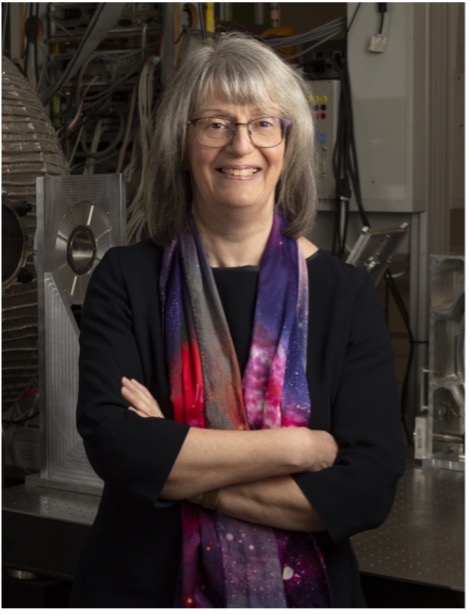
The 2026 Tycho Brahe Medal is awarded to Prof. Gillian Wright (UK Astronomy Technology Centre, United Kingdom) for her leadership in the development of the Mid-Infrared Instrument on the James Webb Space Telescope.
Prof. Gillian Wright graduated with a degree in Natural Philosophy from the University of Glasgow in 1979 and earned a PhD in Physics from Imperial College London in 1986, with a thesis focused on infrared studies of interacting galaxies. She held then positions as a staff scientist and later as Head of Instrumentation at the United Kingdom InfraRed Telescope (UKIRT) in Hawaii. In 1997, Prof. Wright returned to the UK to join the newly established UK Astronomy Technology Centre, where she played a key role, leading as Director from 2012 to 2024 the centre’s efforts in instrumentation and technology development for major international projects. She was Co-I on the Herschel SPIRE instrument and European Principal Investigator for the Mid-Infrared Instrument (MIRI) on the James Webb Space Telescope. She was elected a Fellow of the Royal Society of Edinburgh, Scotland’s National Academy, in 2013, and was awarded a CBE for Services to Astronomy and received the Caroline Herschel Medal in 2023.
With a career spanning over four decades, Prof. Wright has been at the forefront of advancing our understanding of the universe and developing cutting-edge astronomical technologies. In particular, she played a pivotal role in the James Webb Space Telescope (JWST) as the European PI for MIRI, one of JWST’s instruments observing in the mid-infrared wavelength range (5 to 28 microns), where astronomers study the formation of stars and planets, the physics of distant galaxies, and the origins of the Universe. She served on the JWST Science Working Group, contributing to the scientific strategy of the mission. In addition, she has been strongly involved in communicating the scientific importance of JWST and its discoveries to the public.

2026

Prof. Gillian Wright
(UK Astronomy Technology Centre, United Kingdom)
The 2026 Tycho Brahe Medal is awarded to Prof. Gillian Wright (UK Astronomy Technology Centre, United Kingdom) for her leadership in the development of the Mid-Infrared Instrument on the James Webb Space Telescope.
Prof. Gillian Wright graduated with a degree in Natural Philosophy from the University of Glasgow in 1979 and earned a PhD in Physics from Imperial College London in 1986, with a thesis focused on infrared studies of interacting galaxies. She held then positions as a staff scientist and later as Head of Instrumentation at the United Kingdom InfraRed Telescope (UKIRT) in Hawaii. In 1997, Prof. Wright returned to the UK to join the newly established UK Astronomy Technology Centre, where she played a key role, leading as Director from 2012 to 2024 the centre’s efforts in instrumentation and technology development for major international projects. She was Co-I on the Herschel SPIRE instrument and European Principal Investigator for the Mid-Infrared Instrument (MIRI) on the James Webb Space Telescope. She was elected a Fellow of the Royal Society of Edinburgh, Scotland’s National Academy, in 2013, and was awarded a CBE for Services to Astronomy and received the Caroline Herschel Medal in 2023.
With a career spanning over four decades, Prof. Wright has been at the forefront of advancing our understanding of the universe and developing cutting-edge astronomical technologies. In particular, she played a pivotal role in the James Webb Space Telescope (JWST) as the European PI for MIRI, one of JWST’s instruments observing in the mid-infrared wavelength range (5 to 28 microns), where astronomers study the formation of stars and planets, the physics of distant galaxies, and the origins of the Universe. She served on the JWST Science Working Group, contributing to the scientific strategy of the mission. In addition, she has been strongly involved in communicating the scientific importance of JWST and its discoveries to the public.

2026

Prof. Gillian Wright
(UK Astronomy Technology Centre, United Kingdom)
The 2026 Tycho Brahe Medal is awarded to Prof. Gillian Wright (UK Astronomy Technology Centre, United Kingdom) for her leadership in the development of the Mid-Infrared Instrument on the James Webb Space Telescope.
Prof. Gillian Wright graduated with a degree in Natural Philosophy from the University of Glasgow in 1979 and earned a PhD in Physics from Imperial College London in 1986, with a thesis focused on infrared studies of interacting galaxies. She held then positions as a staff scientist and later as Head of Instrumentation at the United Kingdom InfraRed Telescope (UKIRT) in Hawaii. In 1997, Prof. Wright returned to the UK to join the newly established UK Astronomy Technology Centre, where she played a key role, leading as Director from 2012 to 2024 the centre’s efforts in instrumentation and technology development for major international projects. She was Co-I on the Herschel SPIRE instrument and European Principal Investigator for the Mid-Infrared Instrument (MIRI) on the James Webb Space Telescope. She was elected a Fellow of the Royal Society of Edinburgh, Scotland’s National Academy, in 2013, and was awarded a CBE for Services to Astronomy and received the Caroline Herschel Medal in 2023.
With a career spanning over four decades, Prof. Wright has been at the forefront of advancing our understanding of the universe and developing cutting-edge astronomical technologies. In particular, she played a pivotal role in the James Webb Space Telescope (JWST) as the European PI for MIRI, one of JWST’s instruments observing in the mid-infrared wavelength range (5 to 28 microns), where astronomers study the formation of stars and planets, the physics of distant galaxies, and the origins of the Universe. She served on the JWST Science Working Group, contributing to the scientific strategy of the mission. In addition, she has been strongly involved in communicating the scientific importance of JWST and its discoveries to the public.

2026

Prof. Gillian Wright
(UK Astronomy Technology Centre, United Kingdom)
The 2026 Tycho Brahe Medal is awarded to Prof. Gillian Wright (UK Astronomy Technology Centre, United Kingdom) for her leadership in the development of the Mid-Infrared Instrument on the James Webb Space Telescope.
Prof. Gillian Wright graduated with a degree in Natural Philosophy from the University of Glasgow in 1979 and earned a PhD in Physics from Imperial College London in 1986, with a thesis focused on infrared studies of interacting galaxies. She held then positions as a staff scientist and later as Head of Instrumentation at the United Kingdom InfraRed Telescope (UKIRT) in Hawaii. In 1997, Prof. Wright returned to the UK to join the newly established UK Astronomy Technology Centre, where she played a key role, leading as Director from 2012 to 2024 the centre’s efforts in instrumentation and technology development for major international projects. She was Co-I on the Herschel SPIRE instrument and European Principal Investigator for the Mid-Infrared Instrument (MIRI) on the James Webb Space Telescope. She was elected a Fellow of the Royal Society of Edinburgh, Scotland’s National Academy, in 2013, and was awarded a CBE for Services to Astronomy and received the Caroline Herschel Medal in 2023.
With a career spanning over four decades, Prof. Wright has been at the forefront of advancing our understanding of the universe and developing cutting-edge astronomical technologies. In particular, she played a pivotal role in the James Webb Space Telescope (JWST) as the European PI for MIRI, one of JWST’s instruments observing in the mid-infrared wavelength range (5 to 28 microns), where astronomers study the formation of stars and planets, the physics of distant galaxies, and the origins of the Universe. She served on the JWST Science Working Group, contributing to the scientific strategy of the mission. In addition, she has been strongly involved in communicating the scientific importance of JWST and its discoveries to the public.

2026

Prof. Gillian Wright
(UK Astronomy Technology Centre, United Kingdom)
The 2026 Tycho Brahe Medal is awarded to Prof. Gillian Wright (UK Astronomy Technology Centre, United Kingdom) for her leadership in the development of the Mid-Infrared Instrument on the James Webb Space Telescope.
Prof. Gillian Wright graduated with a degree in Natural Philosophy from the University of Glasgow in 1979 and earned a PhD in Physics from Imperial College London in 1986, with a thesis focused on infrared studies of interacting galaxies. She held then positions as a staff scientist and later as Head of Instrumentation at the United Kingdom InfraRed Telescope (UKIRT) in Hawaii. In 1997, Prof. Wright returned to the UK to join the newly established UK Astronomy Technology Centre, where she played a key role, leading as Director from 2012 to 2024 the centre’s efforts in instrumentation and technology development for major international projects. She was Co-I on the Herschel SPIRE instrument and European Principal Investigator for the Mid-Infrared Instrument (MIRI) on the James Webb Space Telescope. She was elected a Fellow of the Royal Society of Edinburgh, Scotland’s National Academy, in 2013, and was awarded a CBE for Services to Astronomy and received the Caroline Herschel Medal in 2023.
With a career spanning over four decades, Prof. Wright has been at the forefront of advancing our understanding of the universe and developing cutting-edge astronomical technologies. In particular, she played a pivotal role in the James Webb Space Telescope (JWST) as the European PI for MIRI, one of JWST’s instruments observing in the mid-infrared wavelength range (5 to 28 microns), where astronomers study the formation of stars and planets, the physics of distant galaxies, and the origins of the Universe. She served on the JWST Science Working Group, contributing to the scientific strategy of the mission. In addition, she has been strongly involved in communicating the scientific importance of JWST and its discoveries to the public.